Friday, February 15, 2008

Animal Fare


Generally when people think of vampires, they think of creatures that feed off of the blood of humans. However, there is a side expressed in “Interview with a Vampire” that isn’t seen in the older books. Are vampires able to survive off of animal blood? According to Louis, they can.

When he first became a vampire, Louis was uncomfortable with living off of the lives of others. After a while, Lestat is looking at some of the beautiful drinking glasses on the plantation and reflecting on how he misses them. Then he shows Louis “a little trick” (32). Lestat finds a rat, cuts its throat and “filled the glass rapidly with blood” (33). While sipping the blood from the crystal, he tells Louis that in certain places, like ships, he may have to live off rats and other animals.

Reluctant to kill people, Louis sees another option here. He begins to drink the blood of animals instead of that of humans. However, not too long later (for a vampire, anyway) he starts to wander the streets of New Orleans thinking about where vampires came from. Were they the devil’s servants? This question bothered him and he forgot how hungry he was. Then he came upon a young girl, crying by her mother’s bed. Her mother had died and she didn’t realize it. Hunger overcame Louis and he left the girl nearly dead.

Is it possible for a vampire to solely survive off of the blood of animals? I have recently read another vampire novel called “Twilight”. This series of novels is about a teenager named Bella who falls in love with Edward, a vampire. Edward and his family of vampires are very different from others of their kind because they can establish permanent settlements among humans. They are able to do this because they only kill animals. In the older novels I’ve studied, this doesn’t even appear to occur to the vampires. They are nearly obsessed with human victims. Modern-day vampires seem to have more of a conscience than the ones from books such as “Dracula”.

Friday, February 8, 2008

Through the Eyes of a Vampire


The books I’ve read all have their own descriptions of a vampire’s strengths. However, I found the description in “Interview with the Vampire” to be much more in depth and interesting. This is most likely because, unlike many other novels, the entire story is told from a vampire’s point of view.

When Louis wakes up after dying (as a human, anyway) he is awakened as a vampire immediately. He feels detachment from human emotions. Louis also sees things in a new way. As a vampire, all details and colors seem more vivid and alive. All sights and sounds have new details and he says the experience was “as if I had only just been able to see colors and shapes for the first time” (21). Lestat pays very little attention as Louis makes this transformation. In the weeks and months following, Lestat tells him that there is much that he doesn’t know and that only he can tell him, but Louis suspects this is only to keep him from leaving.

Compared to other novels I’ve read, the vampires in “Interview with the Vampire” have many fewer weaknesses. Louis mentions Lestat gave his father a rosary and the boy asks about crosses (because rosaries have crosses). Louis tells the boy that this rumor is “sheer nonsense” (23). He then goes on to say that stakes have no effect and that they aren’t able to go through keyholes by turning into steam. The vampires of this story have “no magical powers whatsoever” (24). However, they are unable to go into the sunlight like most traditional vampires. Just as a note of interest, they also sleep in coffins. Louis and Lestat have to drink blood every night to survive.

The vampires of this book are quite different from those in other book. They are monsters in the sense that they kill people and have to do so to survive. However, they are capable of interacting with humans and having intelligent conversations. These vampires aren’t mindless monsters whose sole purpose is to scare people and kill them. They live like people but on a different diet and time schedule. Maybe they just seem different because they are the ones telling the story and not mortals.

Friday, February 1, 2008

Tale of a Transformation


Anne Rice’s Interview with the Vampire is about a boy who is interviewing a vampire, Louis. The interviewer is only called boy and the reader knows nothing about him except that he is recording the interview on cassette tapes and that he is apparently not a vampire. The boy is listening intently as Louis tells him his life story, which, as one can imagine, goes back a very long time.

Louis was born in Paris and his family moved to New Orleans when he was quite young, but his story really starts when he was 25 (in 1791). At this time, Louis was moderately wealthy and living on a plantation with his brother, sister, and mother. His brother was religious and Louis encouraged his brother to follow what he loved. One night, however, he tells Louis that he had visions and they get into an argument. His brother walks out of the room and falls down the stairs and dies.

Louis feels guilty and, unable to cope with the loss, starts to roam the New Orleans streets after dark. Wanting to die, he nearly gets his wish when a vampire, Lestat, feeds off him until he is almost dead. Back at the plantation, Louis lays down while he confesses to his sister and a priest about the argument he had. When the others fall asleep, Lestat comes into the room and offers Louis immortality as a vampire in exchange for the plantation.

A few nights later, after all the necessary financial happenings were arranged, Lestat changes Louis into a vampire. Before proceeding, he tells Louis to “Be still. I am going to drain you now to the very threshold of death, and I want you to be quiet… It is your consciousness, your will, which must keep you alive” (19). With Louis weakened, Lestat bites his own wrist and has Louis drink from the wound. As Louis drinks he hears the pounding of two drums and when Lestat takes his wrist away, he realizes that it was the beating of their hearts. Lestat then sends him out to rid his body of waste as the human part of him dies and the vampire takes hold.

This is the type of transformation that I find is typical of most vampire novels. In Dracula, Dracula forces Mina to drink from him after he drank from her multiple times. Here, Lestat has Louis drink from him as part of the conversion. It doesn’t necessarily seem to be the bite alone that causes the change in many of the books I’ve read, but the exchange of blood.

Friday, January 25, 2008

Legend vs. Legend

After reading “I Am Legend”, I have noted many differences between the vampires in this book and the vampires of “Dracula”. Besides the obvious distinction of the transformation which I have already discussed as it is what makes “I Am Legend” controversial as to if it is a vampire story, there are other prominent differences as well.

The strengths of the vampires are slightly different. Dracula is very powerful; he is strong, can transform into various animals, etc. The vampires in “I Am Legend” have considerable physical strength, but that seems to be their only real advantage when hunting. Also, their strength doesn’t come from the bacteria as much as their minds telling them that as a vampire they are supposed to be strong.

Both vampires have more or less the same weaknesses. Dracula and the infected cannot stand garlic, crosses, mirrors, daylight, and the like. However, they suffer when faced with these objects for different reasons. Dracula can’t tolerate these objects because he is a supernatural being with certain limits. The infected of “I Am Legend” fear these objects (for the most part) from a psychological standpoint. They believe that they are vampires like Dracula and they will die if they come into contact with garlic or a cross.

There is an odd situation concerning the personalities of the vampires and their desire for blood. Dracula, as we know, is a cruel bloodthirsty monster willing to do whatever it takes to feed. The infected that are dead are the same way. However, the living infected are not in any way similar in personality to these two examples. They are able to live with the virus and they don’t need blood because they realize that they aren’t truly vampires in the sense that Dracula is.

Both vampires are killed in the same way as well. Dracula-type vampires can be killed with a stake through the heart or other very serious injury. The vampires in “I Am Legend” can be killed in this way, but Neville gives a scientific reason for why it works. The bacteria in the host can live with or without air. When they live without air, as it normally does, it causes the vampire-like behavior in the host. On the other hand when it lives with air, as it has to when a deep cut is made, it becomes parasitic and “it eats the host” (134).

I thought that “I Am Legend” was a very good book. The movie twisted most of the story, but it was also acceptable for entertainment purposes. It wasn’t quite the best pick for vampire information, but it was good to see a 1950’s view of vampires. For them, vampires were still scary, still a force to be reckoned with. I cannot wait to see what differences may lie in Anne Rice’s “Interview with the Vampire”.

Thursday, January 17, 2008

Legendary Characteristics...or are they?


The personalities of the vampires that Neville originally knew can be compared to those of Stoker’s Dracula. These vampires are obsessed with blood. Every night, they try to coax Neville out of his house so they can feed. The female vampires make obscene sexual gestures to try to tempt him, like the female vampires in Stoker’s novel. However, there is more to the vampire infections than at first met the eye.

Unknown to Neville, there were many people who were infected with the virus, but did not show signs of the vampire infection. This is similar to when someone is a carrier of a genetic disease: the person has a gene for it, but they only show certain, less threatening, signs of the illness. Neville has been killing these people while they were asleep without knowing about this information. Many of these people have flocked together to start society again. They live their lives as they would have without the bacteria. This is completely different from the vampires of Dracula. These semi-vampires are able to live out life like they were really living, compared to Dracula whose life was consumed by what he had become.

Friday, January 11, 2008

Bacillus Vampiris


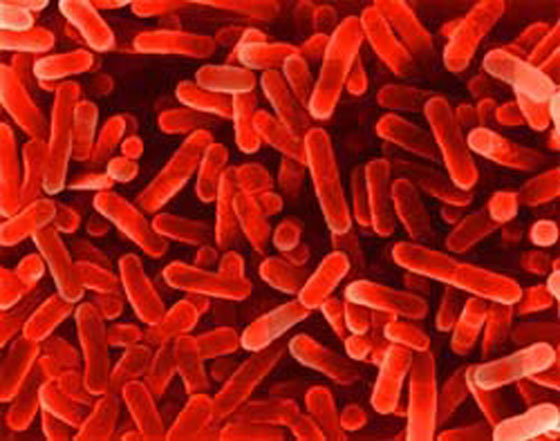
The cause of vampirism in this book is drastically different than that of other vampire books that I have read. In “I am Legend”, vampires are created when humans are infected with bacteria. Neville manages to train himself in the uses of microscopes and other scientific instruments. When he discovers that there really are bacteria in vampire blood, the dubs the bacteria bacillus vampiris.

Neville conducts experiments in order to try to understand the nature of this bacteria and how it works. He learns that when “conditions became unfavorable for life” (76), bacilli can create spores from themselves. These spores are possibly carried, by some means, to where the bacteria can thrive again. Then the spores become like the original bacteria. With this information, Neville realizes that the dust storms that frequently occurred must have been how vampirism spread so quickly. The dust storms must have carried the spores from the comatose vampires and infected other people.

As stated earlier, this method is completely unlike that of most other novels. Other novels, generally, have a vampire transformation when a human is bitten by a vampire. This process is what makes this book more science-fiction than fantasy and creates the thought, especially with the release of the movie, that this cannot possibly be a book about vampires.

Friday, January 4, 2008

The Infected


It may seem that the book is more about a virus than it is about vampires; however, I believe this interpretation stems from the recent film adaptation of the novel. While Neville does study the bacteria (not a virus…there’s a difference), he goes out during the day and kills infected people before they kill him. Considering that Neville treats the infected people as if they were vampires and not people suffering from a disease, I see no reason why this book cannot be used for my topic.

The people infected with the vampire bacteria exhibit symptoms similar to the vampires in Dracula. They show the same weaknesses: daylight, garlic, mirrors, crosses. Neville tries to make sense out of the symptoms and how they can all be related to the bacteria, but finds he has difficulty with some of them. He finds that the crosses are psychological and that, when held up to a vampire that was Jewish, it sometimes has no effect. However, when the same vampire is faced with a torah, they will have an adverse reaction. As time goes on, Neville discovers that many of the vampires’ weaknesses were derived from the mass panic that occurred as the virus spread. There was religious hysteria as people flocked to churches in order to try to save themselves from what appeared to be impending doom. The method in which he kills these people is like that of Dracula, with a stake through the heart. Every night, vampires come in droves to Neville’s home to try to coax him out for his blood.


The vampires portrayed in the novel are different from the movie counterparts. These vampires can speak and appear to retain memories from when they were human. One of the vampires that frequents Neville’s house constantly calls him by name because they were friends when he was human. I feel that there is more to what has happened than Neville knows about. There is something important that he doesn’t know (different from the movie!)